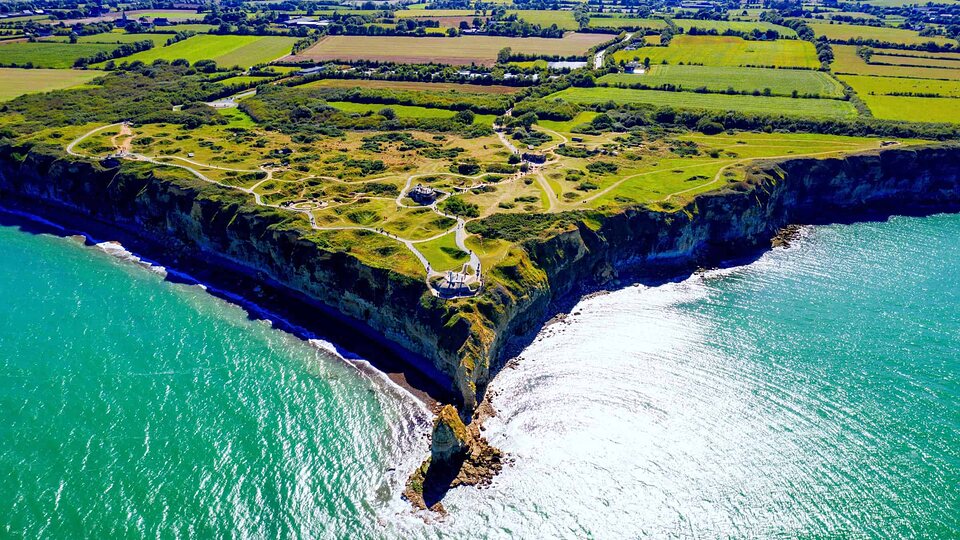
The field of craters
Ten hectares ploughed up by Allied bombing, left untouched since 1944. You walk among craters ten metres across, now carpeted with grass.
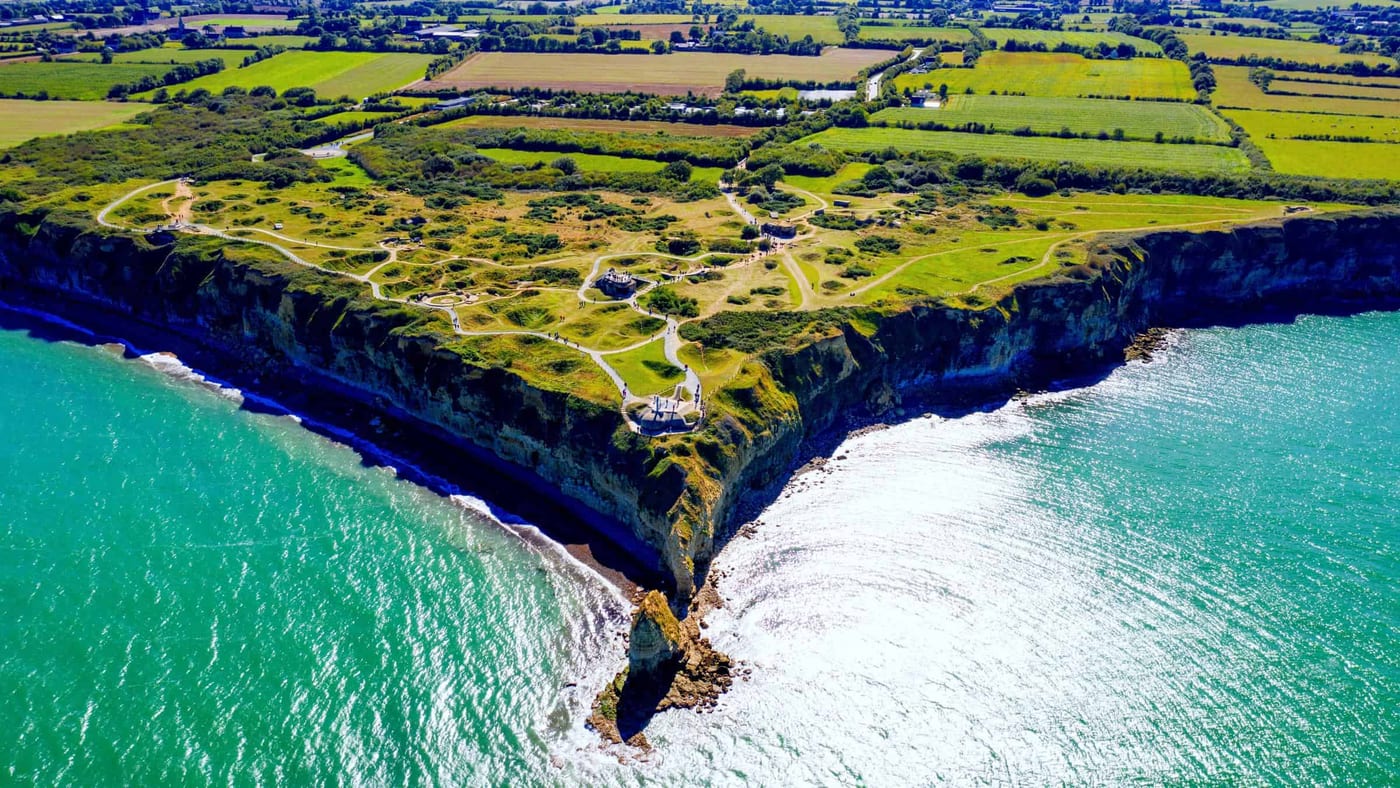
Thirty metres of cliff, a field of craters and gutted casemates: the Pointe du Hoc is twenty-five minutes from your cottage.
On 6 June 1944 at 7.10 am, two hundred and twenty-five of Colonel Rudder's Rangers scaled a thirty-metre vertical cliff under fire, to knock out a battery that threatened Omaha and Utah. The site has been left as it was: the bomb craters, the overturned blockhouses, the observation post on the edge of the drop. It is the most striking D-Day site to see with your own eyes.
Via Grandcamp-Maisy; a large free car park and a waymarked path around the headland.
The site is exposed to the wind and has no shade: bring a windproof jacket and closed shoes, even in August.
The site is windswept, shadeless and lined with cliffs: keep hold of children near the edge. The path goes round the headland in an hour and a half.
Ten hectares ploughed up by Allied bombing, left untouched since 1944. You walk among craters ten metres across, now carpeted with grass.
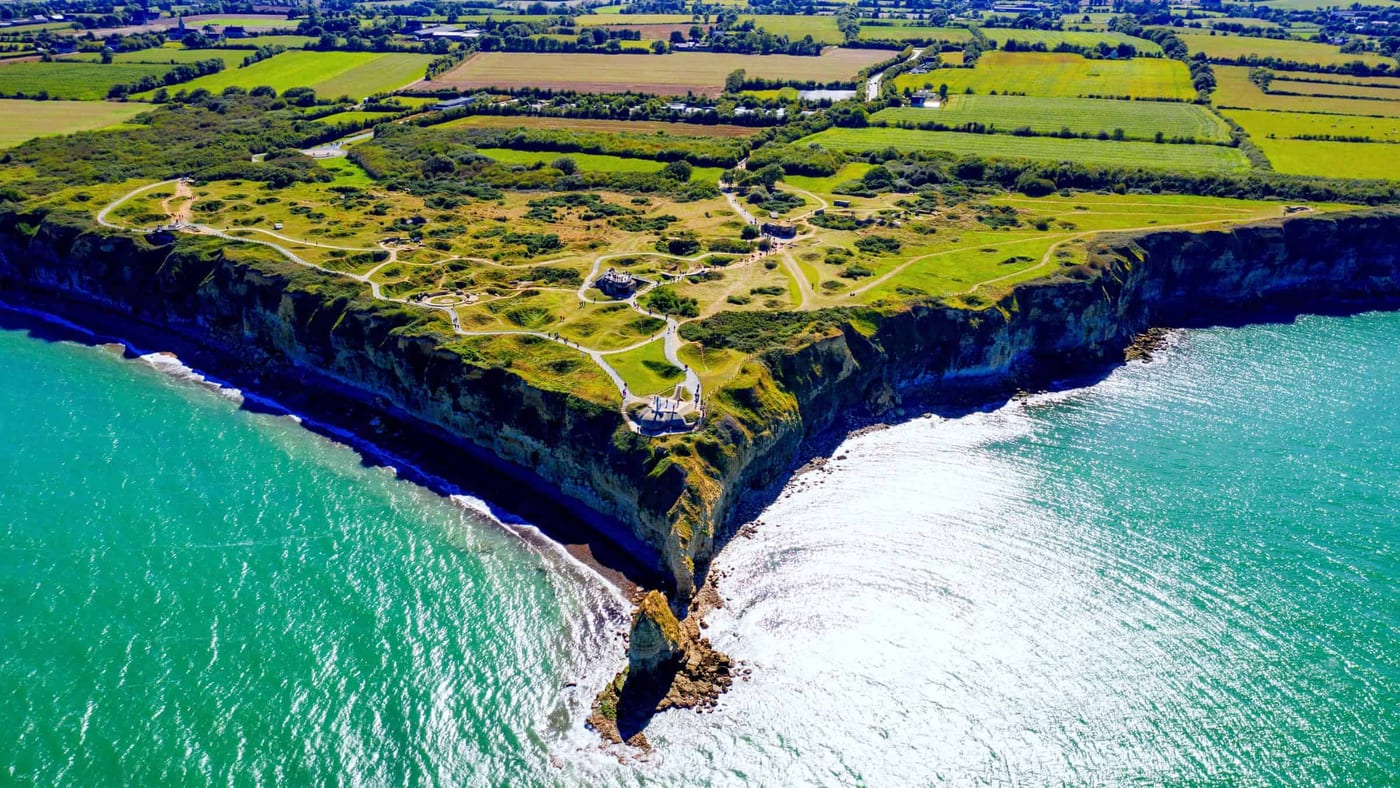
Clinging to the cliff edge, it was used to direct the guns' fire. Restored and reopened to the public, it offers the most dizzying view of the site.
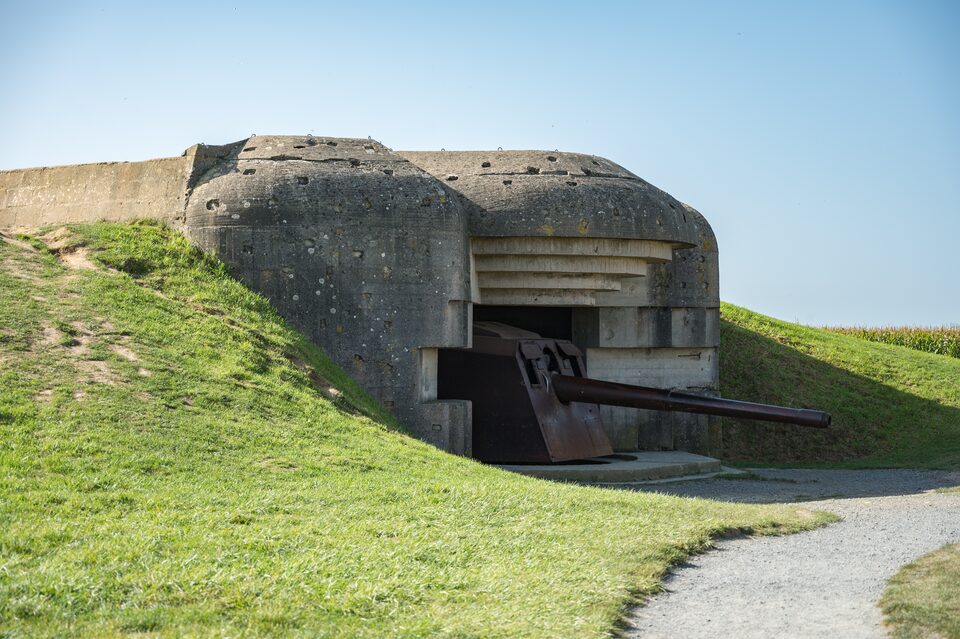
Six 155 mm gun emplacements, including two concrete shelters you can visit. The guns themselves had been moved the day before to an orchard a kilometre away: the Rangers destroyed them there.
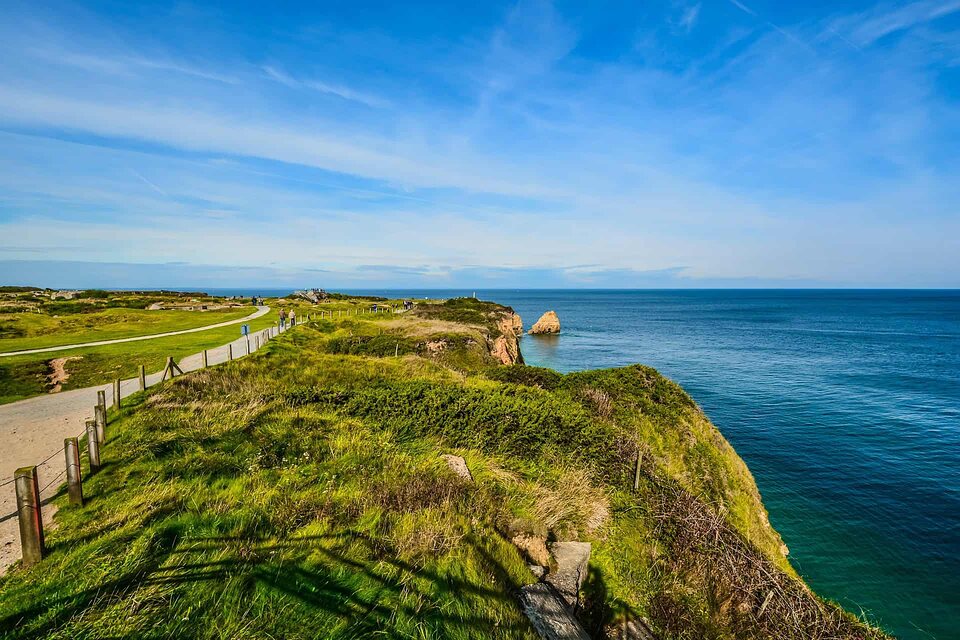
A granite obelisk set on a blockhouse, at the tip of the headland. Below, the cliff that two hundred and twenty-five men climbed with London fire brigade ladders.

5-star cottages and a 2,020 m² heated water park, in Port-en-Bessin facing the Channel.
Check availability